

1. Databuddy: Privacy-First Analytics With Zero Cookies
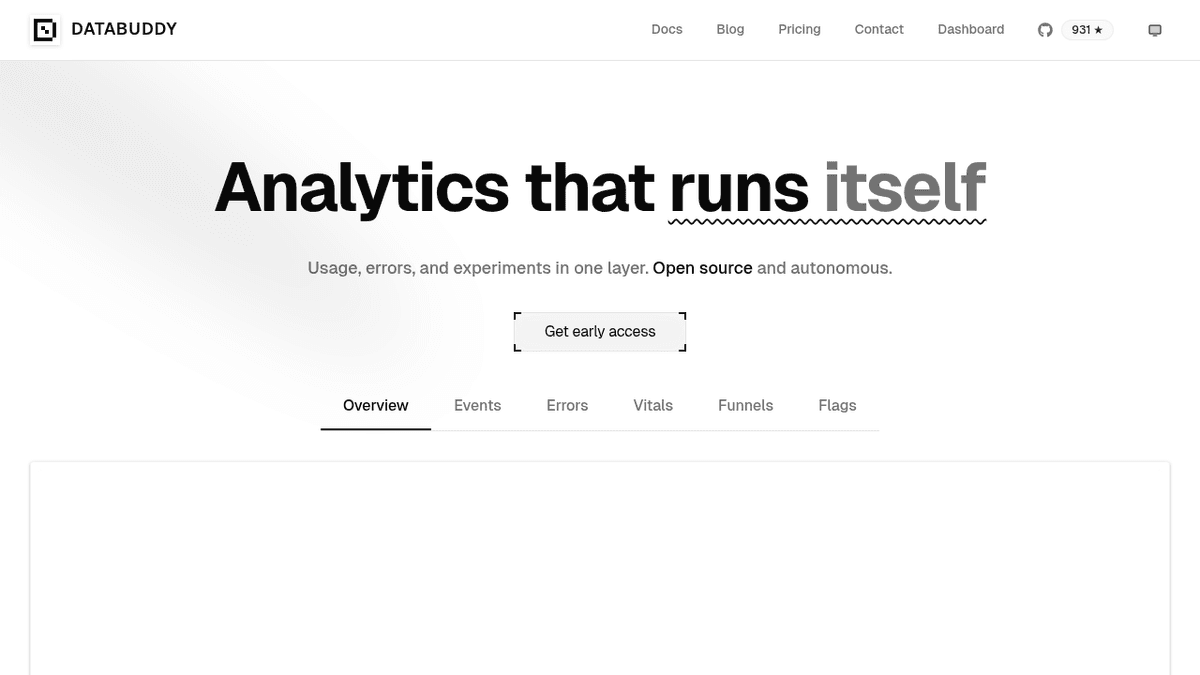
Databuddy stands out as a comprehensive analytics platform built from the ground up for privacy-conscious businesses. Unlike traditional analytics tools, Databuddy operates completely without cookies, eliminating the need for those annoying consent banners that hurt conversion rates.
The platform offers real-time user session monitoring, conversion funnel analysis, and performance metrics—all while maintaining full GDPR and CCPA compliance. When you use Databuddy, your data stays entirely yours; the platform never shares, sells, or accesses your analytics for its own purposes. Its energy-efficient infrastructure also reduces your carbon footprint, making it an ethical choice for sustainability-minded organizations.
Databuddy is particularly well-suited for developers and small-to-medium businesses that need powerful analytics without compromising user privacy. The lightweight tracking script ensures minimal impact on page load times while delivering the insights you need to make informed decisions.
2. Plausible Analytics: Lightweight Open-Source Solution
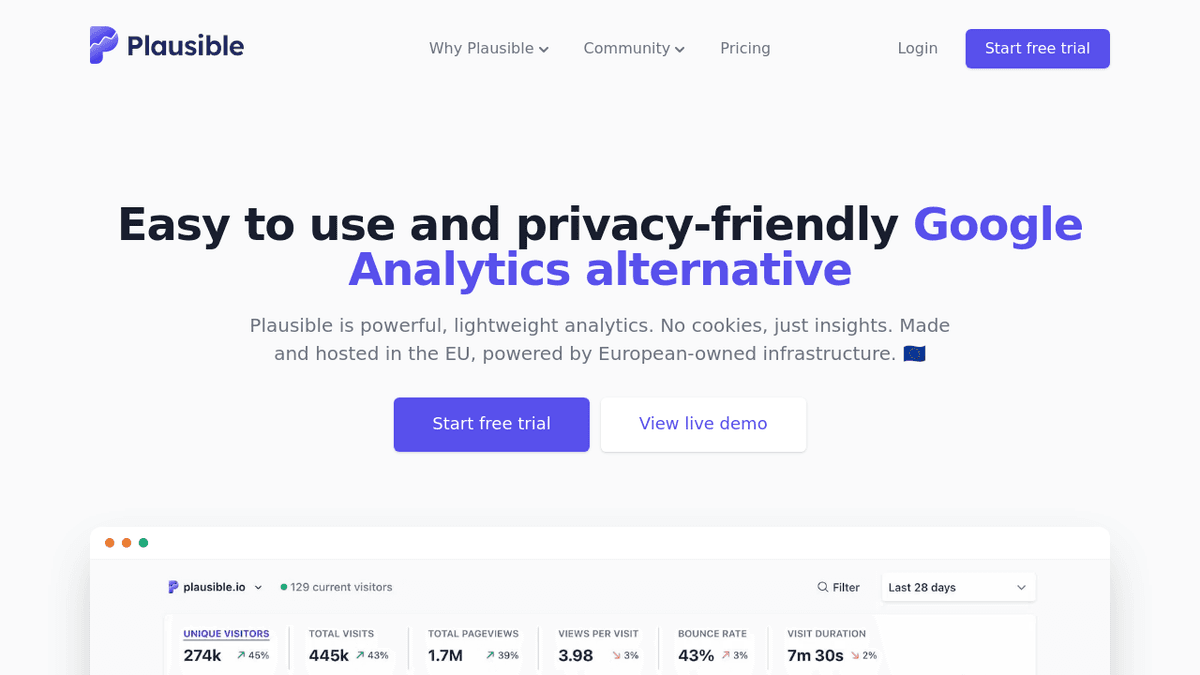
Plausible Analytics has earned a strong reputation for its minimalist, privacy-first approach. The platform weighs in at less than 1KB—about 45 times smaller than Google Analytics—making it one of the lightest analytics solutions available.
The platform collects only essential metrics (page views, referrers, device types, and geographic location at the city level) without storing IP addresses or using persistent identifiers. Plausible offers both a cloud-hosted service with EU-based servers and a self-hosted Community Edition for organizations wanting complete infrastructure control.
Because Plausible doesn't use cookies or collect personal data, it's exempt from GDPR consent requirements in most jurisdictions. The open-source nature means full transparency—you can audit the code yourself to verify privacy claims.
3. Matomo: Feature-Rich Self-Hosted Analytics
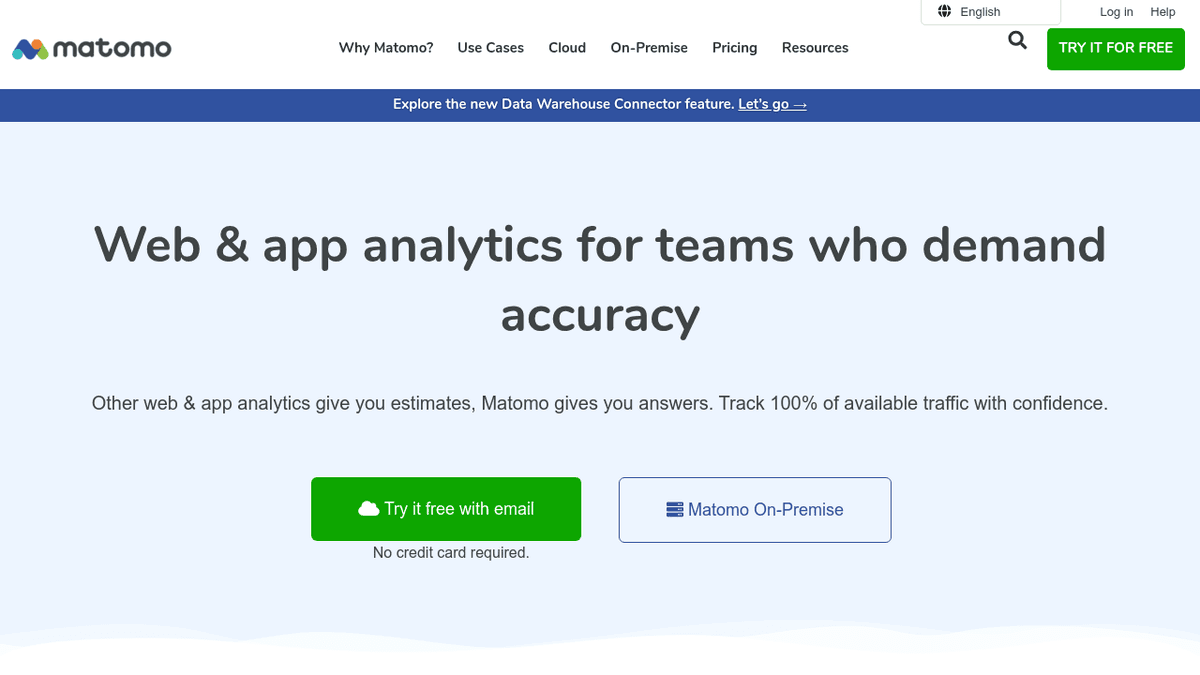
Matomo (formerly Piwik) is one of the most comprehensive privacy-focused analytics platforms available, trusted by over 1 million websites worldwide including the European Commission and various privacy advocacy organizations.
What sets Matomo apart is its extensive feature set combined with complete data ownership. When self-hosted, your analytics data never leaves your servers. Matomo can be configured for cookieless tracking while still providing advanced capabilities like heatmaps, session recordings, conversion funnels, and A/B testing.
The platform offers both on-premise and cloud-hosted options, with the self-hosted version providing 100% data ownership and no data sampling—unlike Google Analytics, which samples your data once you hit certain traffic thresholds. Matomo tracks every single visitor without exception.
4. Fathom Analytics: Simple Cookie-Free Tracking
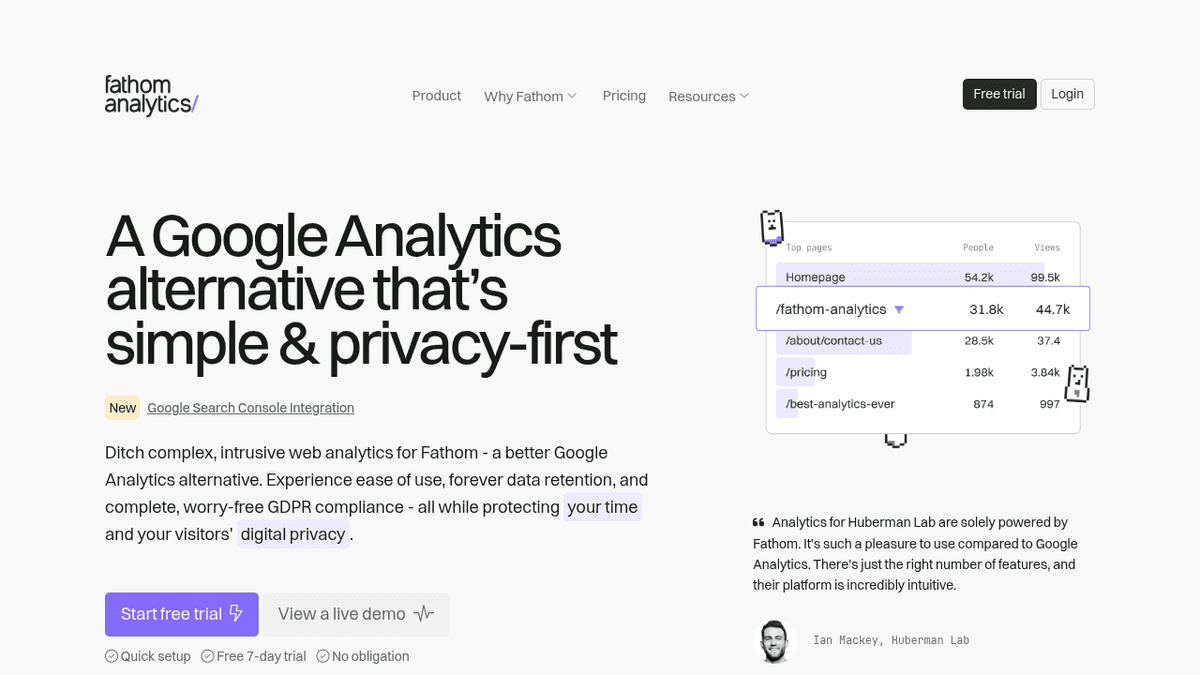
Fathom Analytics pioneered cookieless tracking with its privacy-first approach that uses anonymized hashing and salting to identify unique visitors without storing personal information. The platform was specifically designed to provide accurate web traffic data while respecting visitor privacy.
Fathom doesn't use cookies, doesn't track users across websites, and doesn't collect any personally identifiable information. Instead, it creates temporary hashed signatures that are processed for approximately 48 hours before the identifying salts are permanently deleted, leaving only anonymous aggregate data.
The service is fully GDPR, CCPA, ePrivacy, and PECR compliant without requiring consent banners. For EU customers, Fathom ensures data from European visitors is processed exclusively on EU-based servers. You maintain 100% ownership of your analytics data, which is never sold or shared with third parties.
5. Umami: Open-Source Developer-Friendly Platform
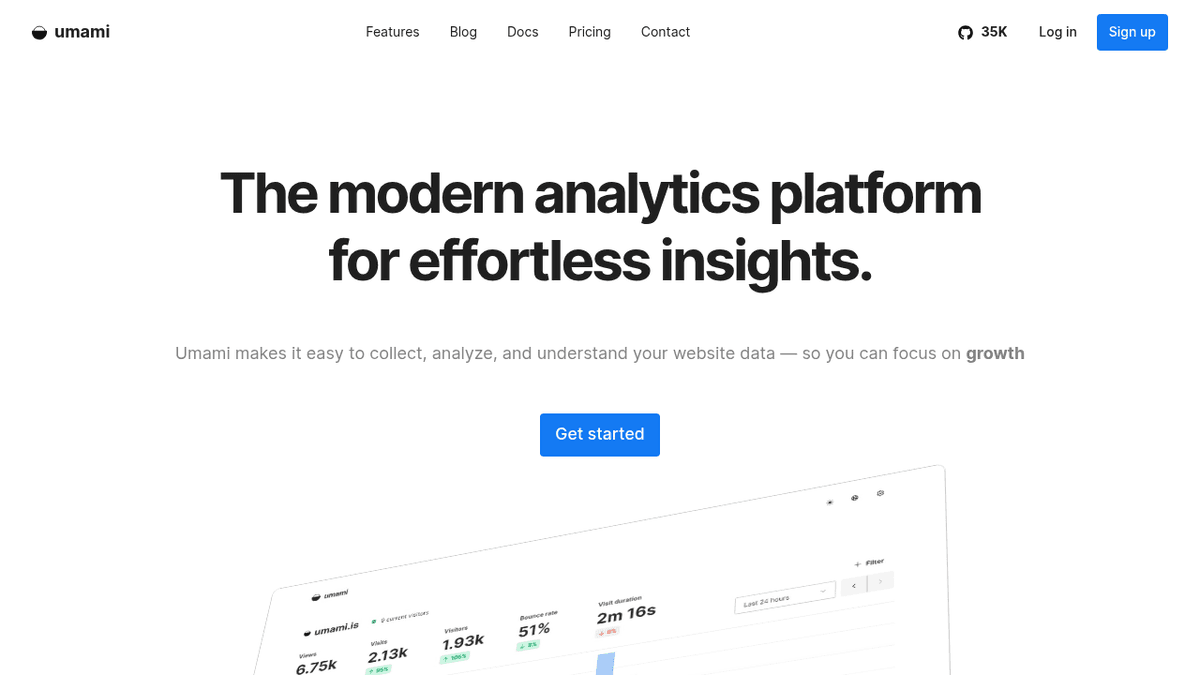
Umami is an open-source, self-hosted analytics platform specifically designed for developers and privacy-conscious website owners. The platform requires no cookies, doesn't track users across sites, and collects no personal data—making it fully GDPR and PECR compliant out of the box.
With a tracking script under 2KB, Umami has minimal impact on page performance. It's dead simple to deploy using Docker and requires only a Node.js server with either a MySQL or PostgreSQL database. Once installed, you get real-time data on traffic, visitors, top pages, referrers, and devices.
Because Umami is fully self-hosted and open-source, you have complete control over your analytics infrastructure and data. The platform is actively maintained by the open-source community and offers a straightforward, no-frills approach to web analytics.
6. Simple Analytics: Privacy-Focused Minimalism
Simple Analytics lives up to its name by offering exactly what you need and nothing more. The platform is entirely cookieless and doesn't collect any personal information, meaning you don't need consent banners or privacy notices for analytics tracking.
The dashboard provides essential metrics—page views, referrers, top pages, and device information—in a clean, intuitive interface. Simple Analytics is GDPR, CCPA, and PECR compliant by design, using a lightweight script that won't slow down your site.
What makes Simple Analytics appealing is its transparent business model: it's subscription-based rather than ad-supported, meaning there's no incentive to harvest or monetize user data. Your analytics data is yours alone, and the company's entire infrastructure is built around respecting visitor privacy while delivering actionable insights.
7. Snowplow: Enterprise-Grade Data Ownership
For organizations requiring enterprise-scale analytics with maximum data control, Snowplow offers a unique approach. It's an open-source behavioral data platform that collects first-party event data and sends it directly to your own data warehouse (like Snowflake, BigQuery, or Redshift).
Snowplow doesn't use third-party cookies and gives you complete ownership of the raw, granular data. Because you control the entire data pipeline—from collection to storage to analysis—there's no vendor lock-in. You can configure Snowplow for entirely cookieless tracking or use first-party cookies if needed for your use case.
This platform is ideal for larger organizations with data engineering resources who want complete control over their analytics infrastructure and the ability to combine behavioral data with other business data in their warehouse. It's more complex to implement than the other options, but offers unparalleled flexibility and data ownership.
Making the Right Choice for Your Business
Choosing the right analytics platform depends on your specific needs, technical resources, and privacy requirements. For small businesses and solo entrepreneurs seeking simplicity with full data ownership and cookieless tracking, options like Databuddy, Plausible, or Simple Analytics offer straightforward implementation without technical overhead.
Developers and technical teams often prefer self-hosted solutions like Umami or Matomo, which provide complete infrastructure control and the ability to customize every aspect of data collection and storage. Meanwhile, enterprises with sophisticated data needs may lean toward Snowplow's warehouse-native approach for maximum flexibility.
Regardless of which platform you choose, all seven options deliver on the core promise: complete data ownership without third-party cookies, ensuring your analytics remain privacy-compliant while still providing the insights you need to grow your business. In 2026's privacy-first landscape, these platforms prove you don't have to sacrifice user trust to understand your audience.